ASUS 90YV0EH2-M0AA00
The 1665 MHz OC boost clock and ultra-fast GDDR6 memory with over 50% more bandwidth deliver smooth high-speed gaming in a compact card. Its Axial-tech fan with a smaller hub and barrier ring improves downward air pressure, while Auto Extreme manufacturing and a stainless steel bracket boost reliability and durability. This card suits budget gamers upgrading an outdated GPU or building a small-form-factor rig that prioritizes compatibility over ray tracing.

No current retailer price











Snapshot
The 30-Second Version
The ASUS Phoenix GTX 1650 is a compact single-fan card from 2019 that still works for small form factor builds and light gaming, but its performance sits near the bottom of our database at the 2nd percentile for raster. The $395 asking price is way too high for what you get, and the EUR listings vary wildly from €598 to €827. Only consider this if you need a tiny, low-power card and can find one at a steep discount.
Pros & Cons
Pros
- Compact single-fan design fits in almost any small form factor case 70th
- 12 Gbps GDDR6 memory is a step up from the original GDDR5 version
- 1665 MHz boost clock in OC mode is decent for this tier
- No external power connector needed on most models, easy drop-in upgrade
- Auto Extreme Manufacturing should mean better reliability over time
Cons
- Raster performance sits in the 2nd percentile, near the bottom of our database
- Thermals are a weak spot at 7th percentile, single fan gets loud under load
- Only 4GB of VRAM, which is a real limitation for modern games
- Ray tracing and AI performance are essentially nonexistent
- Connectivity options are minimal, 5th percentile for ports and outputs
The proof
Performance
Let's talk numbers, and I'll be straight with you: the raster performance here sits near the very bottom of our database. We're talking 2nd percentile. That means almost every other GPU we've tested in recent years will run circles around it. The GTX 1650 has 4GB of GDDR6 running at 12 Gbps, which gives it decent memory bandwidth for its class, but the core itself is just old. In modern titles at 1080p, you'll be dialing settings down to medium or low to hit 60 fps, and in some newer games, even that's a stretch.
The thermal situation is also rough. That single Axial-tech fan is doing its best, but the card lands in the 7th percentile for thermals. In a small case with limited airflow, expect the fan to spin up and get audible under load. The compact design is great for compatibility, but it comes at the cost of cooling headroom. The efficiency story is similar, 2nd percentile, which means you're not getting much performance per watt compared to anything modern. It sips power in absolute terms, sure, but it doesn't do much with what it draws.
Specifications
Full Specifications
Physical
| Weight | 0.5 kg / 1.1 lbs |
vs Competition
Stacked against the competition in our database, the Phoenix GTX 1650 is fighting a losing battle. The Gigabyte Eagle RTX 5070 Ti, MSI Suprim RTX 5080, ZOTAC SOLID RTX 5070, PNY RTX 5070 Ti, and Sapphire PULSE RX 9070 XT are all in a completely different universe. These cards are 10 to 20 times faster in raster workloads, have 12 to 16GB of VRAM, and support features like DLSS and ray tracing that the 1650 can only dream about. The comparison isn't even close.
But here's the thing: those cards are also huge, power-hungry, and expensive. If you're building in a tiny ITX case with a 300W power supply, none of those competitors will even fit or power on. The Phoenix GTX 1650's real competition is other low-profile cards like the RX 6400 or Intel Arc A380, and even those often beat it on price and features. The trade-off is clear: you're giving up a massive amount of performance for the sake of size and power draw. Whether that's worth it depends entirely on your use case.
| Spec | ASUS 90YV0EH2-M0AA00 | Gigabyte GeForce RTX 5070 Ti Eagle Ice | MSI GeForce RTX 5070 Ti Ventus 3X OC | ZOTAC GeForce RTX 5080 APOCALYPSE | PNY GeForce RTX 5080 ARGB OC | Sapphire Radeon RX 9070 XT PULSE |
|---|---|---|---|---|---|---|
| Chipset | - | GeForce RTX 5070 Ti | GeForce RTX 5070 Ti | GeForce RTX 5080 | GeForce RTX 5080 | Radeon RX 9070 XT |
| Vram | - | 16GB GDDR7 | 16GB GDDR7 | 16GB GDDR7 | 16GB GDDR7 | 16GB GDDR6 |
| Boost Clock Mhz | - | 2542 | 2482 | 2730 | 2620 | 2970 |
| Tdp W | - | 300 | 300 | 360 | 360 | 304 |
| Memory Bus Bits | - | 256 | 256 | 256 | 256 | 256 |
| Ray Tracing | - | true | true | true | true | true |
| GPU Class | - | consumer | consumer | consumer | consumer | consumer |
| Compare | Compare | Compare | Compare | Compare |
| Product | AI | Rt | Vram | Raster | Feature | Thermal | Efficiency | Connectivity | Affordability |
|---|---|---|---|---|---|---|---|---|---|
| ASUS 90YV0EH2-M0AA00 | 0.7 | 2.1 | 0.7 | 2.3 | 10.9 | 6.5 | 2.3 | 5.3 | 69.7 |
| Gigabyte GeForce RTX 5070 Ti Eagle Ice Compare | 79.6 | 88.7 | 86 | 89 | 95.9 | 91.7 | 72.1 | 94.1 | 26.7 |
| MSI GeForce RTX 5070 Ti Ventus 3X OC Compare | 79.6 | 92.5 | 86 | 89 | 95.9 | 91.7 | 72.1 | 94.1 | 23.1 |
| ZOTAC GeForce RTX 5080 APOCALYPSE Compare | 85.7 | 97.6 | 89 | 94.5 | 95.9 | 91.7 | 57 | 94.1 | 20.3 |
| PNY GeForce RTX 5080 ARGB OC Compare | 85.7 | 97.6 | 89 | 94.5 | 95.9 | 91.7 | 57 | 94.1 | 14.5 |
| Sapphire Radeon RX 9070 XT PULSE Compare | 89.3 | 84.7 | 73.8 | 75.2 | 95.9 | 72.3 | 45.5 | 88.8 | 43.3 |
Price
Value & Pricing
Here's where things get tricky. The USD price we're seeing is $395, which is frankly absurd for a GTX 1650 in 2025. This card launched at $149 back in 2019, and even accounting for inflation and market weirdness, $395 is a tough pill to swallow. The EUR listings show a wild spread from €598 to €827 across four different stores, and that variance alone tells you the market for this card is all over the place. If you're in Europe and dead set on this card, shop around, because the cheapest listing is €229 less than the most expensive one. That's not a small difference.
For the money, you're getting bottom-of-the-chart performance in almost every category. The affordability percentile of 69th sounds okay until you realize it's being compared against cards that cost $1,000 or more. In absolute terms, paying $395 for 2nd percentile raster performance is a bad deal. You'd be much better off looking at a used RTX 3050 or RX 6600 if your budget is in that range. The only scenario where this makes sense is if you absolutely need a low-profile, low-power card and can find one at a steep discount.
Read more
Overview
The ASUS Phoenix GTX 1650 is a card that feels like it fell out of a time capsule from 2019, and honestly, that's kind of the point. This is a compact, single-fan card built for people who need something small, cheap, and good enough to get a display output or play older games without their PC turning into a space heater. It's not chasing 4K, it's not pretending to do ray tracing, and it's definitely not trying to impress anyone at a LAN party. It's a workhorse for small form factor builds and budget upgrades.
Who is this for? Someone with an old office PC or a tiny case who wants to play esports titles, indie games, or maybe do some light video editing. The Phoenix line is all about fitting into small chassis, and the single Axial-tech fan keeps the card short enough to squeeze into places where bigger cards fear to tread. If you're building your first gaming rig on a shoestring budget, this card will get you in the door.
What makes it interesting is the sheer contrast between its design goals and the modern GPU market. While everyone else is shipping triple-slot monsters that need their own zip code, this little card just wants to be unobtrusive. The 12 Gbps GDDR6 memory is a nice touch over the original GDDR5 version, and the 1665 MHz boost clock in OC mode is respectable for the silicon. But make no mistake, this is a card from another era trying to stay relevant in 2025.
Common Questions
Q: Can this card run modern AAA games at 1080p?
It can run them, but not well. With only 4GB of VRAM and raster performance in the 2nd percentile of our database, you'll need to drop settings to low or medium to hit playable frame rates in newer titles. Games from 2019 and earlier will run much better, and esports titles like CS2, Valorant, and League of Legends should be fine at 1080p with competitive settings.
Q: Does the Phoenix GTX 1650 need an external power connector?
Most Phoenix GTX 1650 models draw all their power from the PCIe slot and don't require an external power connector. This makes it a great drop-in upgrade for older office PCs with weak power supplies. However, some OC variants may have a 6-pin connector, so check the specific model before buying.
Q: Is this card good for a small form factor build?
Yes, that's actually its biggest strength. The Phoenix line is designed specifically for compact cases, and the single Axial-tech fan keeps the card short enough to fit in most ITX and small form factor chassis. Just be aware that the thermal performance is a weak spot at the 7th percentile, so you'll want at least some airflow in your case to keep temperatures reasonable.
Q: Why is this card so expensive compared to its original launch price?
The GTX 1650 launched at $149 in 2019, but current listings show it at $395 in the US and €598 to €827 in Europe. This is likely due to the card being out of production and sellers pricing remaining stock at a premium. The market for budget GPUs has also shifted, with fewer truly cheap options available. At these prices, you're paying a scarcity premium, not a performance premium.
Who Should Skip This
If you're building a gaming PC with any kind of modern ambitions, skip this card entirely. The 4GB of VRAM is a hard ceiling that will cause stuttering and texture pop-in in games from the last few years, and the raster performance is simply too weak for anything beyond esports and older titles. You'd be much better off with a used RTX 3050, RX 6600, or even an Intel Arc A750 if you can find one at a similar price.
Also skip this if you care about ray tracing, AI workloads, or high refresh rate gaming. The ray tracing score of 4.1 out of 100 is essentially a formality, and the AI performance is dead last in our database. This card is for basic display output and light gaming, nothing more. If you need anything beyond that, look elsewhere.
Verdict
If you're upgrading an old office PC or building a compact system for esports and indie games, the Phoenix GTX 1650 can work, but only at the right price. Find one used or on sale for under $150, and it's a reasonable way to get a display output and play lighter titles. The single-fan design is genuinely useful for small cases, and the GDDR6 memory gives it a slight edge over the original 1650.
For everyone else, this card is a pass. The $395 asking price is hard to justify when you can get dramatically better performance for the same money or less. If you need a budget card, look at the used market or wait for a sale on something newer. The GTX 1650 had its moment, but that moment was six years ago.
Usage Scores
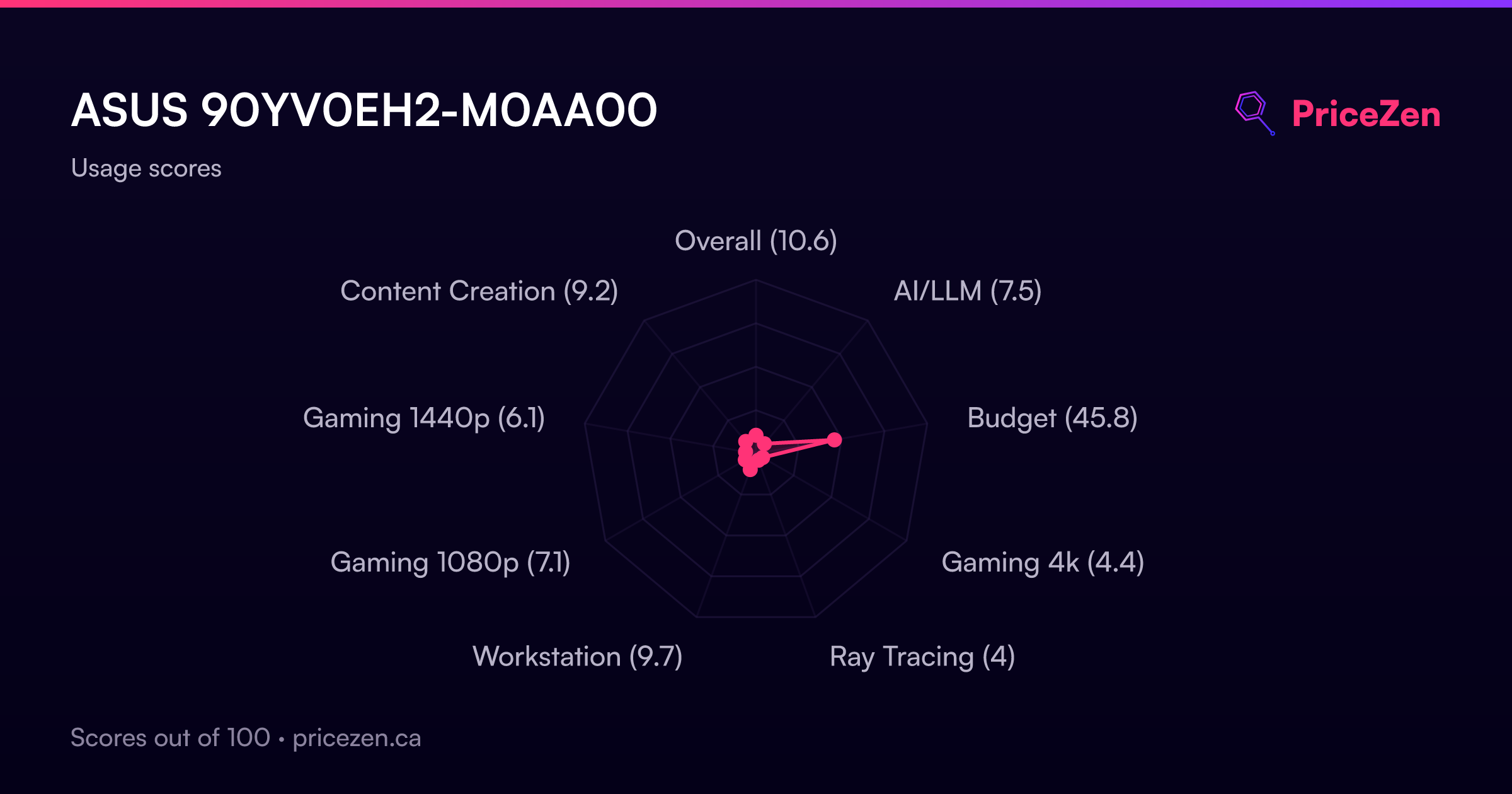
- Overall10.6
- AI/LLM7.5
- Budget46.1
- Gaming 4k4.4
- Ray Tracing4
- Workstation9.7
- Gaming 1080p7.1
- Gaming 1440p6.1
- Content Creation9.2