Nikon 1890

5/100 overall score
Snapshot
The 30-Second Version
The Nikon Z6III is a full-frame mirrorless camera built for hybrid shooters who need strong video and stills in one body. It offers internal 6K/60p N-RAW recording, a best-in-class EVF, and fast autofocus with deep learning subject detection. It's pricey for a mid-range body, but the video features justify the cost for the right user.
Pros & Cons
Pros
- Internal 6K/60p N-RAW video recording
- Excellent EVF with 4000 nits brightness and 120fps refresh
- Fast and accurate autofocus with deep learning subject detection
- Partially stacked sensor reduces rolling shutter significantly
- Up to 120fps continuous shooting with electronic shutter
Cons
- 24.5MP resolution feels modest for high-res stills work
- No fully stacked sensor like the Z8 or Z9
- Battery life takes a hit from the bright EVF
- Price is high for a mid-range body
- High-res zoom is digital, not optical
The proof
Performance
The partially stacked sensor is the star here. It's not as fast as the fully stacked sensor in the Z8 or Z9, but it's a massive leap over the standard BSI sensor in the Z6II. In practice, that means the electronic shutter can fire at up to 120fps in continuous mode, with far less rolling shutter distortion than older models. Sports and wildlife shooters will notice the difference immediately. The ISO range runs from 100 to 64000 natively, expandable to Hi 1.7, which is equivalent to ISO 204800. Low light performance is strong, and the -10EV AF sensitivity means the camera can still find focus in conditions where you can barely see your subject.
Video performance is where the Z6III really separates itself from the competition at this price. Internal N-RAW at 6K/60p is a feature you used to need an external recorder for, and even then it was rare. The oversampled 4K footage looks crisp, and 4K/120p gives you clean slow motion without dropping to a heavily cropped mode. Full HD at 240p is there for when you need extreme slow motion. The high-res zoom feature is genuinely useful for run-and-gun shooters who want a little extra reach without swapping lenses. It's not a replacement for a longer lens, but it's a nice trick to have.
Specifications
Full Specifications
Physical
| Weight | 0.7 kg / 1.5 lbs |
vs Competition
The Z6III's closest competition comes from Sony and Canon. The Sony A7 IV is the obvious rival, with a similar 33MP sensor and strong video features, but it tops out at 4K/60p with a crop and lacks internal RAW recording. The Canon EOS R6 Mark II is another direct competitor, offering 4K/60p oversampled video and excellent autofocus, but again, no internal RAW. The Z6III beats both on video specs and EVF quality, though the Sony has a resolution advantage for stills.
Against Nikon's own lineup, the Z6III sits between the Z6II and the Z8. The Z8 has a fully stacked 45.7MP sensor, 8K video, and a more robust body, but it costs significantly more and is heavier. If you need maximum resolution and speed, the Z8 is the call. If you want 90% of the video capability in a lighter, cheaper body, the Z6III makes a strong case. The Z6II is now a bargain on the used market, but its autofocus and video features feel dated next to the Z6III.
| Spec | Nikon 1890 | Gigabyte GeForce RTX 5070 Ti Eagle Ice | ASUS GeForce RTX 5080 PRIME EVO OC | MSI GeForce RTX 5070 Ti Ventus 3X OC | ZOTAC GeForce RTX 5080 APOCALYPSE | PNY GeForce RTX 5080 ARGB OC |
|---|---|---|---|---|---|---|
| Chipset | - | GeForce RTX 5070 Ti | GeForce RTX 5080 | GeForce RTX 5070 Ti | GeForce RTX 5080 | GeForce RTX 5080 |
| Vram | - | 16GB GDDR7 | 16GB GDDR7 | 16GB GDDR7 | 16GB GDDR7 | 16GB GDDR7 |
| Boost Clock Mhz | - | 2542 | 2685 | 2482 | 2730 | 2620 |
| Tdp W | - | 300 | 360 | 300 | 360 | 360 |
| Memory Bus Bits | - | 256 | 256 | 256 | 256 | 256 |
| Ray Tracing | - | Yes | Yes | Yes | Yes | Yes |
| GPU Class | - | consumer | consumer | consumer | consumer | consumer |
| Compare | Compare | Compare | Compare | Compare |
| Product | AI | Rt | Vram | Raster | Feature | Thermal | Efficiency | Connectivity | Affordability |
|---|---|---|---|---|---|---|---|---|---|
| Nikon 1890 | 0.6 | 2 | 0.7 | 2.2 | 10.5 | 6.2 | 2.2 | 5.1 | 3.5 |
| Gigabyte GeForce RTX 5070 Ti Eagle Ice Compare | 78.9 | 88.6 | 86 | 88.9 | 95.7 | 91.8 | 71.6 | 94.2 | 22.9 |
| ASUS GeForce RTX 5080 PRIME EVO OC Compare | 85.5 | 97.7 | 89.1 | 94.5 | 88.4 | 91.8 | 56.6 | 94.2 | 19.3 |
| MSI GeForce RTX 5070 Ti Ventus 3X OC Compare | 78.9 | 92.4 | 86 | 88.9 | 95.7 | 91.8 | 71.6 | 94.2 | 21.1 |
| ZOTAC GeForce RTX 5080 APOCALYPSE Compare | 85.5 | 97.7 | 89.1 | 94.5 | 95.7 | 91.8 | 56.6 | 94.2 | 23.7 |
| PNY GeForce RTX 5080 ARGB OC Compare | 85.5 | 97.7 | 89.1 | 94.5 | 95.7 | 91.8 | 56.6 | 94.2 | 16.1 |
Price
Value & Pricing
Pricing for the Z6III varies by region, and in Brazil it's listed at BRL 14,390, which is a serious chunk of change. That puts it in a tricky spot. It's more expensive than the Z6II was at launch, but it's still well below the Z8. For hybrid shooters who need strong video and stills in one body, the value proposition is solid. You're getting Z8-level autofocus and video features in a smaller, cheaper package. But if you only shoot stills, you might find better value in a higher-resolution body or a used Z7II. The Z6III is a video-first camera that happens to take great photos, not the other way around.
Read more
Overview
The Nikon Z6III is a full-frame mirrorless camera aimed at hybrid shooters who split time between stills and serious video work. It sits in that upper mid-range bracket, not quite a flagship Z8 or Z9, but packing a lot of their tech into a smaller, more affordable body. The headline here is Nikon's first partially stacked 24.5MP CMOS sensor paired with the EXPEED 7 processor. That combo unlocks fast readout speeds, which means less rolling shutter and the ability to shoot 6K/60p N-RAW internally. For anyone searching for a camera that can handle both a wedding shoot and a YouTube workflow, this one's worth a close look.
People often ask if the Z6III is good for video. Short answer: yes, very. You get internal 6K/60p RAW recording, oversampled 4K UHD, 4K/120p, and Full HD at 240p for 10x slow motion. There's also a high-res zoom feature that gives you up to 2x digital zoom in HD and 1.4x in 4K without a huge quality hit. Line-in audio and pro monitoring tools round out a video package that punches above its class.
For stills, the autofocus is a big step up from the Z6II. Nikon claims it's about 20% faster, with subject detection inherited from the Z8 and Z9. It can lock onto faces as small as 3% of the frame and focus down to -10EV, which is basically moonlight territory. The EVF is also a standout: 4000 nits of brightness, 5760k dots, 120fps refresh, and DCI-P3 color. It's one of the best viewfinders you'll find on any camera right now.
Common Questions
Q: Is the Nikon Z6III good for video?
Yes, the Z6III is excellent for video. It records internal 6K/60p N-RAW, oversampled 4K UHD, 4K/120p, and Full HD at 240p for 10x slow motion, plus it has line-in audio and pro monitoring tools.
Q: How does the Nikon Z6III compare to the Z6II?
The Z6III is a major upgrade over the Z6II. It has a partially stacked sensor for faster readout, autofocus that's about 20% faster, a much brighter EVF, and internal RAW video recording that the Z6II lacks.
Q: Does the Nikon Z6III have good autofocus?
Yes, the Z6III has excellent autofocus with deep learning subject detection inherited from the Z8 and Z9. It can focus down to -10EV and detect faces as small as 3% of the frame.
Q: Is the Nikon Z6III good for photography?
The Z6III is a capable stills camera with a 24.5MP sensor, up to 120fps continuous shooting with the electronic shutter, and a wide ISO range from 100 to 64000. However, if you need very high resolution for large prints, a 45MP body might be a better fit.
Who Should Skip This
Skip the Z6III if you're a pure stills shooter who prioritizes resolution over speed. Landscape, studio, and fine art photographers will get more from a 45MP body like the Z7II or Z8. If you're on a tight budget, the Z6II is still a solid camera on the used market, and the Z5 is even cheaper. Video shooters who need 8K or fully stacked sensor speed should look at the Z8 or Z9 instead. And if you're already invested in Sony or Canon glass, switching systems for the Z6III alone probably isn't worth it unless the video features are exactly what you need.
Verdict
Should you buy the Nikon Z6III? If you're a hybrid shooter who needs serious video features without jumping to a flagship body, yes. This is one of the best cameras you can buy for internal RAW video at this price point. The autofocus is reliable, the EVF is genuinely best-in-class, and the partially stacked sensor fixes the rolling shutter issues that plagued earlier Z6 models. It's a camera that gets out of your way and lets you work.
But it's not for everyone. If you mainly shoot landscapes or studio work where resolution matters more than speed, a 45MP body will serve you better. If you're on a tight budget, the Z6II or a used Z7II might be the smarter buy. The Z6III is a specialist's tool disguised as a generalist camera. Know what you need before you spend the money.
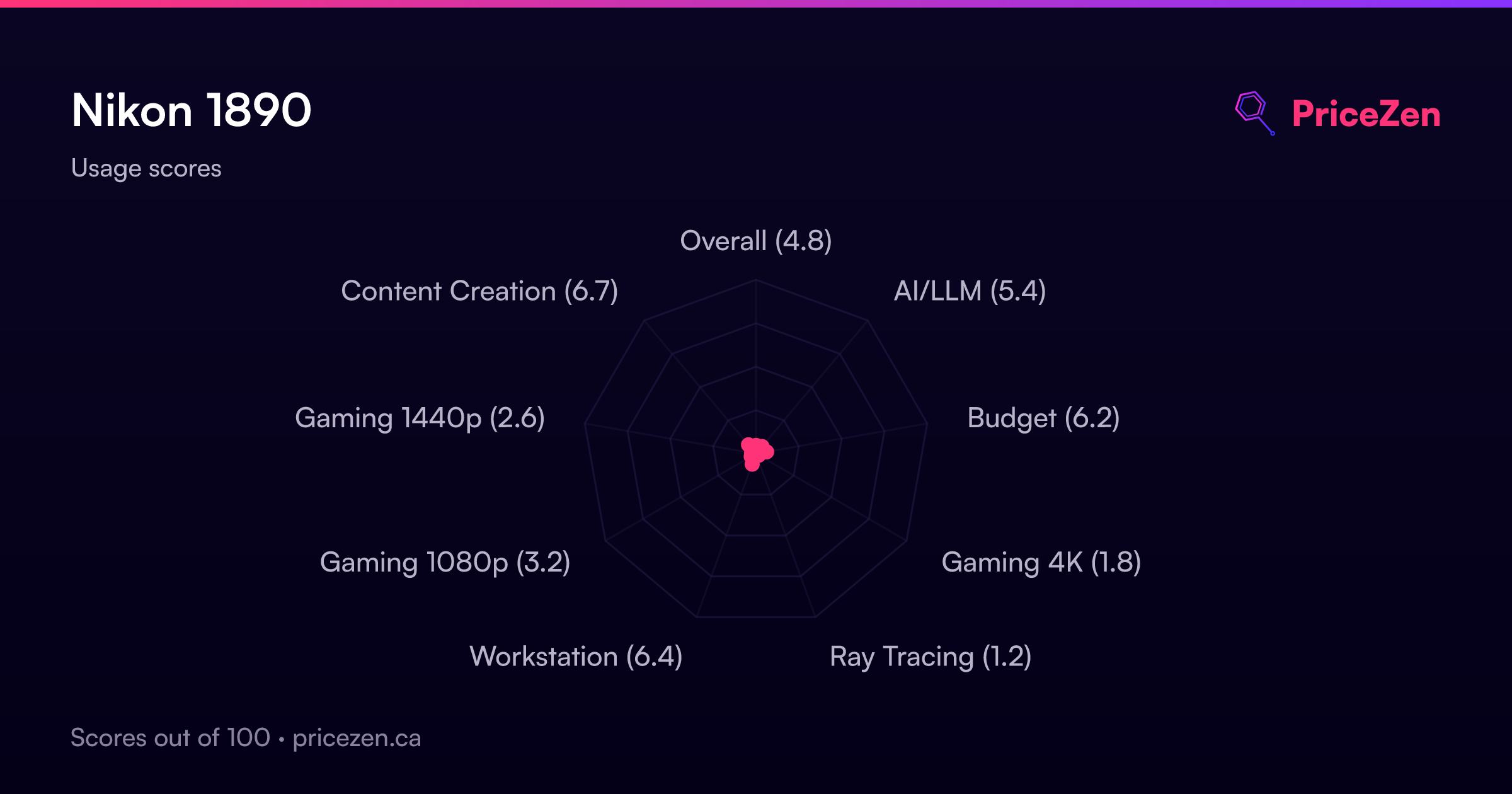
Usage Scores
- Overall4.8
- AI/LLM5.4
- Budget6.2
- Gaming 4K1.8
- Ray Tracing1.2
- Workstation6.4
- Gaming 1080p3.2
- Gaming 1440p2.6
- Content Creation6.7