Panasonic LUMIX S DC-S9N-D Orange
The full-frame CMOS sensor in an 81g body makes this the lightest interchangeable-lens full-frame option available, though it lacks stabilization and weather sealing. Its vibrant orange finish and bundled 18-40mm F4.5-6.3 lens emphasize portability and style over ruggedness or video features. This camera is best for beginner photographers wanting a minimal, travel-friendly full-frame setup for casual stills and product shots.

No current retailer price
Where we saw it before. Check the store for today's price.











Snapshot
The 30-Second Version
A full-frame sensor in a jacket-pocket body with a screen that refuses to flip. Great for posting photos, terrible for filming yourself.
Pros & Cons
Pros
- Build quality is a standout, weather sealed and genuinely tough 89th
- IBIS ranks well above average for a body this small 76th
- Real Time LUT and Open Gate are legitimately useful, not gimmicks 75th
- Full-frame sensor and RAW video in a compact shell
Cons
- Fixed display and a weak EVF showing make self-shooting painful
- Autofocus and burst both lag behind most mirrorless rivals
- Vlogging is its worst use case by a mile, 20/100
- Only one owner rating on record, so there's almost no crowd data
The proof
Performance
What surprised us is how lopsided the spec sheet reads. Stabilization sits at the 75th percentile and connectivity matches it, which tracks with the whole shoot-and-share design. Then you look at burst at the 32nd percentile and autofocus at the 37th, and the action-shooting story falls apart. Video capability is about average despite the 4K, Log and RAW video support on paper, and our video use-case score is only 40.3/100. Battery lands slightly below the midpoint too. The listed weight of 2186g is clearly the bundle figure, not the body, so ignore that number if you're chasing a pocketable setup. And the kit glass here is the S 18-40mm F4.5-6.3, which is slow at the long end. That's the tradeoff for the size.
Specifications
Full Specifications
Sensor
| Type | CMOS |
| Size | full-frame |
| Megapixels | 24.2 MP |
Video
| Max Resolution | 4K |
| Log Profile | Yes |
| RAW Video | Yes |
Build
| Weather Sealed | Yes |
| Weight | 2.2 kg / 4.8 lbs |
Connectivity
| Wi-Fi | Yes |
| USB | USB-C |
| HDMI | Micro HDMI |
| Hot Shoe | Yes |
vs Competition
Cross-shop the Fujifilm X-T10 if you want a smaller-sensor, cheaper-feeling entry point and don't need full-frame or RAW video, because the S9's sensor ranking is only middling and its autofocus is a weak spot anyway. The Leica SL2-S is the one to look at if you're prioritizing serious stills work over social output, since the S9's burst and AF scores won't carry a paid shoot. And be honest with yourself about the cinema names on the list: the Sony CineAlta BURANO, Blackmagic URSA Cine17K 65 and ARRI ALEXA 35 XTREME are production cameras, not competitors for a compact hybrid you carry around all day. The S9 wins on portability and sharing speed against everything here, and loses on autofocus and framing flexibility.
| Spec | Panasonic LUMIX S DC-S9N-D | Sony Alpha a7R VI | Fujifilm X-H2 | Nikon Z8 | OM System OM-1 Mark II | Canon EOS R6 Mark III |
|---|---|---|---|---|---|---|
| Type | mirrorless | mirrorless | mirrorless | mirrorless | mirrorless | mirrorless |
| Sensor | 24.2MP full-frame | 66.8MP full-frame | 40.2MP aps-c | 45.7MP full-frame | 20.4MP micro-four-thirds | 32.5MP full-frame |
| AF Points | - | 759 | 425 | 493 | 1053 | 1053 |
| Burst FPS | - | 30 | 15 | 30 | 120 | 40 |
| Video | 4K | 8K @120fps | 8K @60fps | 8K @120fps | 4K @60fps | 6K @120fps |
| IBIS | Yes | Yes | Yes | Yes | Yes | Yes |
| Weather Sealed | Yes | Yes | Yes | Yes | Yes | Yes |
| Weight (g) | 2186 | 622 | 579 | 820 | 511 | 609 |
| Compare | Compare | Compare | Compare | Compare |
| Product | AF | EVF | Build | Burst | Video | Sensor | Battery | Display | Connectivity | Social Proof | Affordability | Stabilization |
|---|---|---|---|---|---|---|---|---|---|---|---|---|
| Panasonic LUMIX S DC-S9N-D | 37 | 37.5 | 88.5 | 32 | 45.4 | 53 | 45.9 | 27.5 | 75.6 | 29.4 | 45.7 | 74.9 |
| Sony Alpha a7R VI Compare | 96.5 | 98.9 | 94.2 | 87.8 | 98.9 | 81 | 96.4 | 97.3 | 95.5 | 97.4 | 12.7 | 99.6 |
| Fujifilm X-H2 Compare | 91.5 | 96.3 | 93.2 | 79.1 | 94.6 | 98.8 | 97.2 | 94.9 | 95.5 | 92.5 | 24.8 | 95.8 |
| Nikon Z8 Compare | 92.7 | 90.6 | 97.4 | 94.6 | 98.5 | 67.6 | 88.5 | 97.1 | 95.5 | 97.4 | 16.1 | 87.8 |
| OM System OM-1 Mark II Compare | 98.6 | 99.8 | 92.6 | 99.3 | 83.5 | 46.7 | 95.1 | 94.9 | 95.5 | 86.7 | 25.9 | 99.6 |
| Canon EOS R6 Mark III Compare | 98.6 | 89.8 | 93.8 | 90.7 | 89.5 | 62 | 96.7 | 94.9 | 95.5 | 92.5 | 22.9 | 99.6 |
Price
Value & Pricing
At JPY 196,114 from Amazon JP (or MXN 31,881 in Mexico), affordability sits at the 41st percentile, so this isn't a bargain-bin full-frame entry. You're paying for the compact body and the creator workflow, not for class-leading specs. If those two things are exactly what you want, it's fair value. If you just want the most camera per yen, keep shopping.
Read more
Overview
The LUMIX S9 is a full-frame sensor stuffed into a body that thinks it's a compact, and Panasonic aimed it squarely at people who post more than they print. The one thing to know: this camera is built around getting finished-looking footage off the card and onto your phone fast. Real Time LUT bakes color grades in-camera, Open Gate lets you pull multiple aspect ratios out of a single take, and LUMIX Lab pushes files over Wi-Fi straight to your library. That's a genuinely smart pitch.
But our scoring model isn't sold on the whole package. The 24.2MP full-frame CMOS lands right in the middle of the pack for mirrorless sensors, autofocus ranks below average, and the fixed display plus weak EVF showing drag it down hard for anyone shooting themselves. Build quality is the standout at the 88th percentile, weather sealing is here, and IBIS scores well above average. So you get a tough, stabilized, small full-frame body with a mediocre screen and soft autofocus numbers. Pick your priorities accordingly.
Common Questions
Q: Can I use this for vlogging?
No. The display is fixed, the EVF showing ranks in the bottom third, and vlogging is its lowest-scoring use case at 20/100. Get something with a flip screen.
Q: Is the 18-40mm kit lens enough?
For daylight walking-around shots, yes. It's F4.5-6.3, so it gets slow fast as you zoom, and you'll want something brighter for indoor or evening work.
Q: Does the stabilization actually help handheld video?
IBIS here ranks well above average for mirrorless, so yes, it's one of the stronger parts of this camera. Pair it with the LUT workflow and you can hand off usable clips without a gimbal.
Who Should Skip This
If you're looking for a talk-to-camera vlogging rig, this isn't it. The fixed screen alone kills it, and our vlogging score of 20/100 backs that up. Same story if you shoot weddings or fast-moving subjects, where the autofocus and burst rankings sit near the bottom third. Look at the Fujifilm X-T10 for a cheaper casual option, or step up to the Leica SL2-S if paid stills work is the goal.
Verdict
Buy it if you're a photo-first creator who wants full-frame files, in-camera color grades and a body that survives being tossed in a bag. Skip it if you film yourself talking to a lens, because the fixed screen and 20/100 vlogging score are disqualifying. Our best-for scores top out at 42.5/100 for beginners, which tells you this is a niche tool rather than an all-rounder. Good camera, narrow job.
Usage Scores
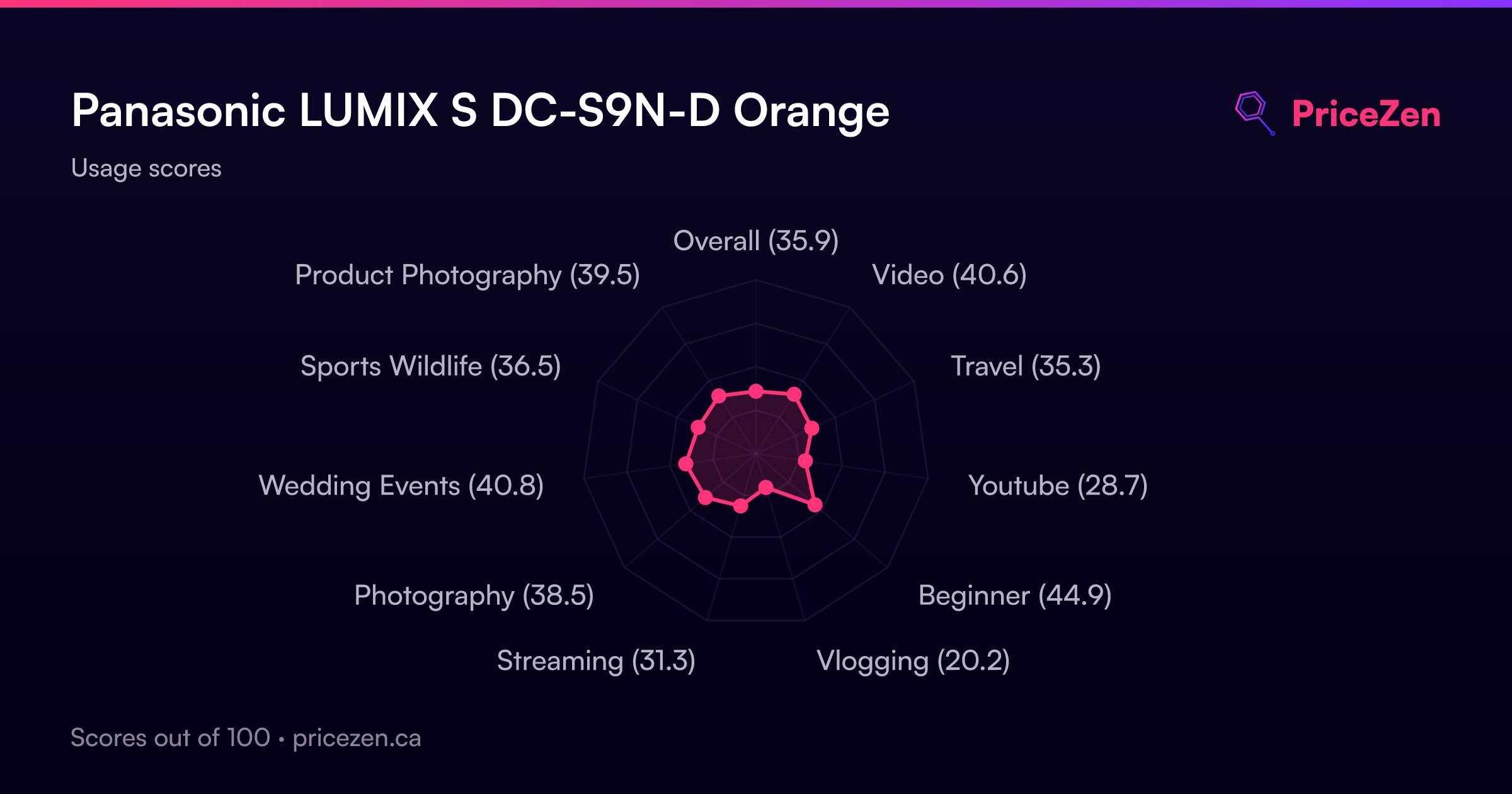
- Overall35.9
- Video40.6
- Travel35.3
- Youtube28.7
- Beginner44.9
- Vlogging20.2
- Streaming31.3
- Photography38.5
- Wedding Events40.8
- Sports Wildlife36.5
- Product Photography39.5