Best NVIDIA Best Value GPUs Premium in 2026




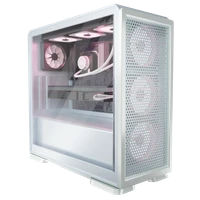

NVIDIA GeForce RTX 5080 16GB GDDR7

Great Alternatives
These options also score highly and may better suit your specific needs
NVIDIA GeForce RTX 3060 Ti 30 Series 8GB GDDR6
Why we recommend this ▼
The Ampere-based RTX 3060 Ti delivers strong 1080p and capable 1440p gaming via 4864 CUDA cores and 8GB of 256-bit GDDR6 memory. Its compact dual-fan, 2-slot design at 242mm fits easily into smaller builds while still supporting ray tracing and DLSS. This card is best for 1080p gamers wanting high refresh rates in a power-efficient 200W package.

NVIDIA GeForce RTX 4070 Founders Edition 12GB GDDR6X
Why we recommend this ▼
The Ada Lovelace architecture and DLSS 3 frame generation deliver a substantial 1440p performance leap over the previous generation, all within a compact 244mm dual-slot design and a 200W power envelope. The Founders Edition cooler maintains quiet operation while the 12GB GDDR6X memory buffer handles high-resolution textures effectively. This card is best for 1440p gamers seeking a power-efficient upgrade that fits easily into small form factor builds.

NVIDIA GeForce RTX 3080 Founders Edition 10GB GDDR6X
Why we recommend this ▼
Built on the 8nm Ampere architecture, it delivers 30.6 FP32 TFLOPS of compute power and 10GB of GDDR6X memory with a 912 GB/s bandwidth for high-fidelity 4K gaming. The Founders Edition design offers a premium dual-axial flow-through thermal solution that keeps the 165W TDP chip cool under load. This card is best for gamers targeting high-refresh 1440p or smooth 4K experiences who want robust ray tracing performance.

NVIDIA GeForce RTX 3090 Ti 24GB GDDR6X
Why we recommend this ▼
The 24GB GDDR6X memory on a 384-bit bus delivers 936 GB/s bandwidth, paired with 10752 CUDA cores and a 1695MHz boost clock, making it a top-tier Ampere card for heavy workloads. Its dual-fan Founders Edition design keeps the 450W TDP manageable, and the 4.4/5 rating from 78 reviews reflects solid build quality and reliable performance. Best for professionals running AI LLM training or 1440p ray-traced gaming who need maximum VRAM and compute power, though its high power draw and price make it less suited for budget builds.

NVIDIA RTX 2000 Ada 16GB GDDR6 workstation Black
Why we recommend this ▼
The 4nm Ada Lovelace GPU delivers 2816 CUDA cores, 16GB of ECC GDDR6 memory, and 12 FP32 TFLOPS in a 70W TDP, making it a low-power workstation card that fits in compact 168mm dual-slot builds. Its 4x DP 1.4a outputs, AV1 encode, and ray tracing support add versatility for multi-display and content creation workflows, while the blower design suits dense systems. Best for professionals running CAD, simulation, or AI inference tasks that need ECC reliability and quiet operation in a small form factor workstation.

NVIDIA RTX PRO 4500 Blackwell 32GB GDDR7 workstation
Why we recommend this ▼
The 10,496 CUDA cores and 32GB of ECC GDDR7 memory on the Blackwell architecture provide substantial computational accuracy for error-sensitive professional workloads. Its dual-slot blower design with 200W TDP and four DisplayPort 2.1b outputs delivers reliable multi-display support in dense workstation chassis. This card is best for AI developers and data scientists running large language models locally who require memory integrity without scaling to flagship data-center GPUs.

NVIDIA RTX A1000 8GB GDDR6 workstation Black
Why we recommend this ▼
Built on the 8nm Ampere architecture, this single-slot card delivers 6.7 FP32 TFLOPS of compute power from 2304 CUDA cores within a strict 50W TDP, making it ideal for compact workstations. Its 8GB of GDDR6 memory and four Mini DisplayPort 1.4a outputs natively drive quad 5K or dual 8K displays for expansive visual workspaces. This card is best for 3D modelers and video post-production artists who need certified reliability and multi-display support in a small form factor system.

NVIDIA RTX PRO 6000 Blackwell Server Edition 96GB GDDR7 workstation
Why we recommend this ▼
Equipped with 96GB of GDDR7 ECC memory and 24,064 CUDA cores on the Blackwell architecture, this card delivers a massive 1.8 TB/s bandwidth for error-free, large-scale computation. Its 5th Gen Tensor Cores with FP4 precision and DLSS 4 support accelerate neural shader workloads, while the 600W TDP is managed within a standard 305mm dual-slot form factor. This GPU is best for data scientists and AI researchers deploying multi-billion-parameter LLMs in server environments where memory integrity and capacity are critical.
